> For the complete documentation index, see [llms.txt](https://docs.feedotter.com/llms.txt). Markdown versions of documentation pages are available by appending `.md` to page URLs; this page is available as [Markdown](https://docs.feedotter.com/integrations/hubspot/how-to-set-up-your-hubspot-integration.md).
# How to Set Up Your HubSpot Integration
## Connecting Your HubSpot Account to FeedOtter
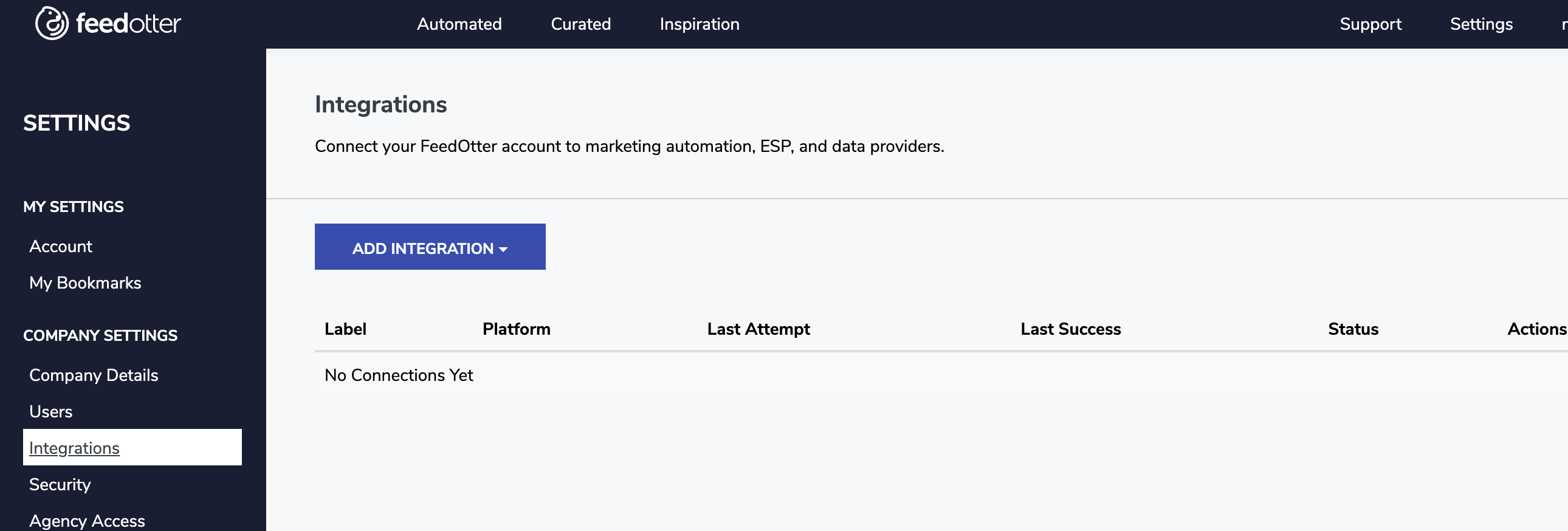
In FeedOtter, navigate to **Settings > Integrations**.
1. Select HubSpot. Fill in the fields (Unit Id can remain 0 unless you know otherwise, and Professional can remain checked unless you know otherwise).
1. Click **Save.**
2. FeedOtter will redirect you to HubSpot. You will be prompted to give FeedOtter access. This may require you to login to HubSpot if you are not already logged in. Complete these steps.
3. When completed, HubSpot will redirect to the FeedOtter interface. You can verify if your connection is working by clicking the TEST button next to your HubSpot integration.
{% hint style="info" %}
FeedOtter pushes your emails to HubSpot and does not access or see any personal or contact-related information.
{% endhint %}
At this point you are ready to set up your RSS and/or curated newsletters using the following tutorials:
* [Getting Started](/automations/getting-started.md) (Automated Newsletters)
* [Broken mention](broken://pages/wp9CWnlsAU53UvvWdcZ3) (Curated Newsletters)